ServicesWhole-Home Rewiring
Whole-Home Rewiring in Grand Prairie
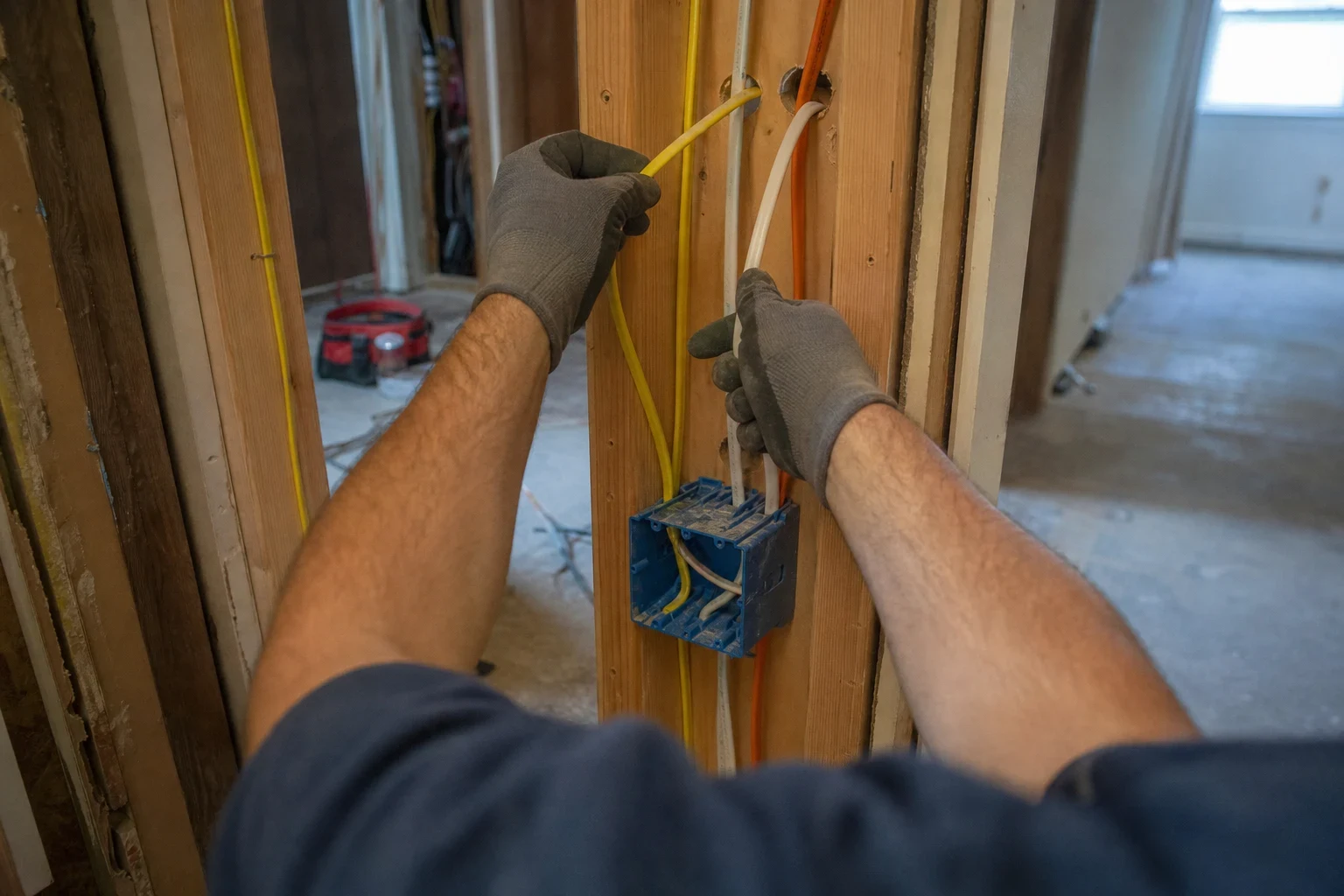
We replace aging branch wiring with new copper circuits, grounded outlets and properly sized breakers. The work runs room by room, permits and inspections are handled as your jurisdiction requires, and you get a written scope before any wall is opened.
When rewiring is the right call
Rewiring means pulling out the old branch circuits that feed your outlets, switches and fixtures and running new copper cable back to the panel. It makes sense when the wiring itself is the problem: insulation that has gone brittle, aluminum branch circuits with loosening connections, or a house full of two-prong outlets with no ground wire behind them.
It is not the answer to every flickering light. A single bad splice or a failing breaker is an electrical repair, and we will tell you so. We test circuits and open a sample of boxes before recommending a full rewire, because the condition of the conductors, not the age of the house, decides it.
Most homes in the area sit on concrete slabs with no crawlspace, so new runs come down from the attic through the wall top plates. That shapes how we plan each room and keeps the number of wall openings low.
What a rewire includes
- 01
New copper branch circuits
We run new NM cable sized to each circuit's load, 12-gauge on 20-amp circuits and 14-gauge on 15-amp lighting, replacing the old conductors rather than splicing onto them.
- 02
Grounded outlets and new boxes
Every receptacle gets an equipment ground. Worn or undersized boxes are replaced so devices are not crammed against too many conductors.
- 03
AFCI and GFCI protection
Bedrooms and living areas get arc-fault protection, and kitchens, baths, garages and outdoor outlets get ground-fault protection where code calls for it.
- 04
Dedicated appliance circuits
Microwaves, dishwashers, disposals and laundry get their own circuits so one appliance no longer trips a breaker shared with half the kitchen.
- 05
Smoke alarm wiring
We wire smoke alarms on an interconnected circuit as required during a rewire, so one alarm sounding sets off the rest.
- 06
Panel review and labeling
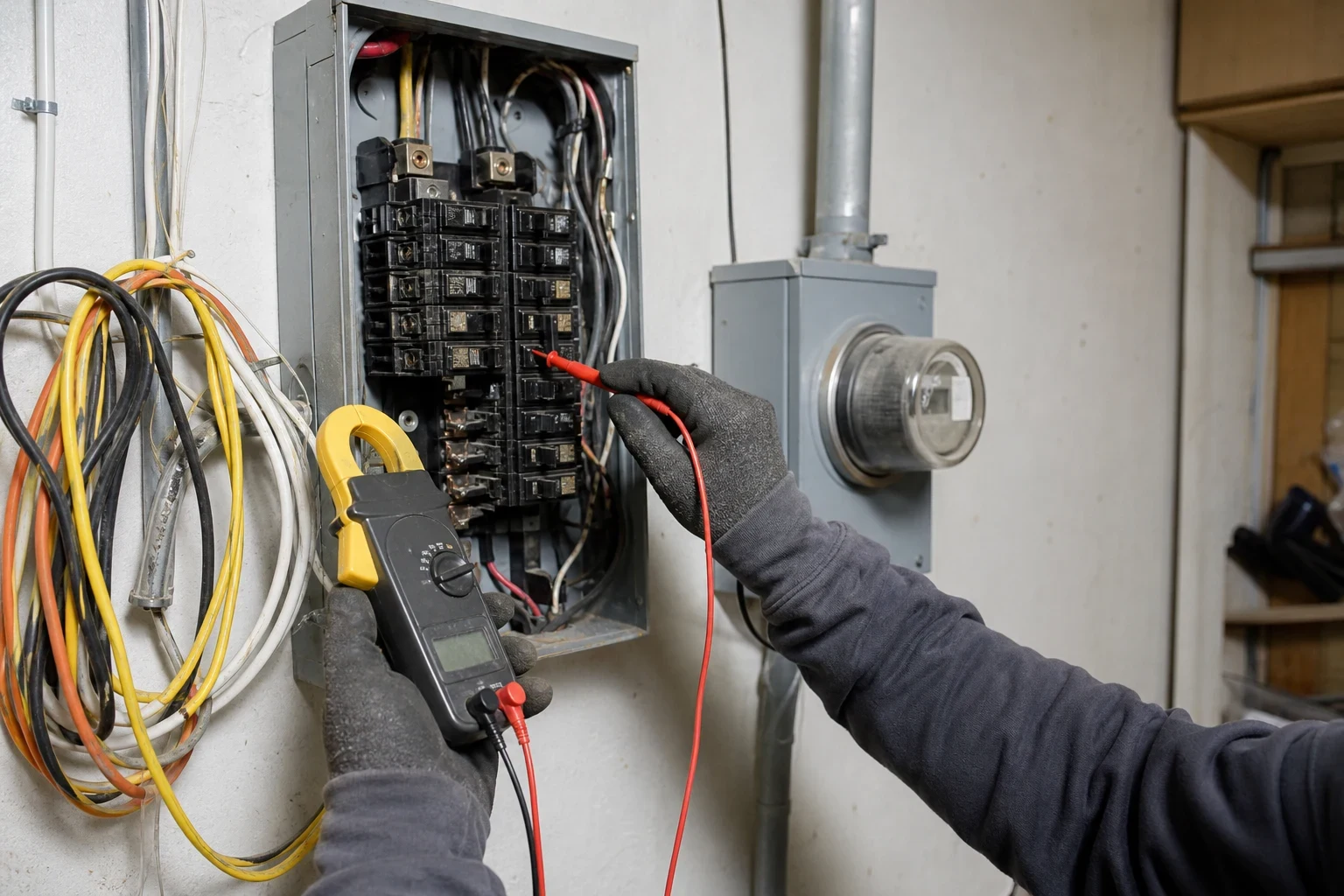
We check whether your panel can take the new circuit count. If it cannot, we explain a panel upgrade separately, and every breaker leaves with an accurate label.
Questions about Whole-Home Rewiring?
Call(682) 343-9645Signs your wiring is due for replacement
Aluminum branch wiring
Many homes built in the late 1960s and early 1970s used aluminum for outlet and switch circuits. Aluminum expands and contracts more than copper and oxidizes at terminals, so connections loosen and run hot over time.
Cloth or crumbling insulation
Older rubber and cloth-wrapped cable gets brittle, especially where it has baked for years in a hot North Texas attic. Once insulation cracks, bare conductors can touch framing or each other.
Two-prong outlets throughout
Ungrounded outlets leave surge protectors and three-prong appliances without a fault path. Swapping in three-prong devices without a ground does not fix that.
Scorch marks or an odd odor
Cover plates that have yellowed or browned, receptacles that stay warm with nothing plugged in, or a scorched-insulation odor near a switch usually mean a terminal has loosened and is arcing. Have it looked at before the heat damages the cable behind it.
Lots of past patchwork
Splices buried in walls, extension cords used as permanent wiring and circuits nobody can trace usually mean decades of additions on top of tired original wiring.
How a rewiring job runs
- 1
Testing and walkthrough
We trace circuits, check for grounds and open representative boxes in each area. You see what we found and hear whether a full or partial rewire fits.
- 2
Written scope and permit
You get a line-item scope listing circuits, devices and any panel work. We pull the permit as required by the local jurisdiction before work starts.
- 3
Rough-in, room by room
We cover floors, move through the house in sections and restore power to occupied rooms at the end of each day. New cable drops from the attic, and small, square openings are cut only where a run cannot be fished.
- 4
Inspections
The rough wiring is inspected before walls are closed. After devices and trim go in, the final inspection confirms the finished work.
- 5
Final testing and handoff
We test every outlet for polarity and ground, check AFCI and GFCI operation, and walk you through the labeled panel.
What affects the cost of rewiring
Rewiring is priced from the scope, not a flat rate per house. After the walkthrough we write out exactly what is included so you can see which items drive the total. These are the factors that matter most.
- Size and circuit count
- Square footage matters less than how many circuits, outlets and fixtures need new wire. A large kitchen can carry more circuits than three bedrooms combined.
- Attic access and insulation
- Low roof pitch, deep blown insulation or ductwork crowding the top plates make runs slower. Easy attic access keeps labor down.
- Wall and ceiling finishes
- Plaster, tile backsplashes and paneling take more care to open than drywall. The number and location of openings affects time and patching.
- Panel capacity
- If your existing panel lacks spaces or capacity for modern AFCI breakers and dedicated circuits, panel work is added to the scope.
- Occupied or vacant home
- Rewiring an empty house between owners goes faster than working around furniture and keeping rooms powered each night.
Whole-home rewiring questions
Will we need to leave the house during the rewire?
In most cases, no. We rewire one section at a time and get power back on in the rooms you live in before we head out each evening. Some rooms, the kitchen or a bedroom for example, will be without power for part of a workday, and we agree on those times with you in advance.
How many days does a full rewire take?
The timeline comes down to the number of circuits, how easy the attic is to work in and how many inspections are required. A small one-story house moves quicker than a big two-story home with finished ceilings. Your written scope includes a working schedule before any work begins.
Will you have to open up a lot of drywall?
Only what the cable routes require. On slab homes most runs come down from the attic, and where a cable can't be fished we cut a clean, square opening. You'll know roughly how many openings to expect, and how they'll be patched, before we start.
Is a partial rewire an option?
It is when testing shows the trouble stays in one area, such as a kitchen or an older addition. When aluminum or brittle wire runs through the whole house, rewiring only part of it leaves the same hazard in the remaining rooms, and we'll tell you that directly.
Do I have to fully rewire if I have aluminum wiring?
Not always. Pigtailing every connection to copper using aluminum-rated connectors is an accepted repair. We weigh it against a full rewire after looking at the cable's condition and counting the connections involved.
Does the new wiring get a permit and inspections?
Yes. We file with the local jurisdiction before pulling any cable and schedule the rough-in and final inspections it calls for. The result is an official record of the new wiring, which is useful when you sell or speak with your insurer.
Find out what is behind your walls
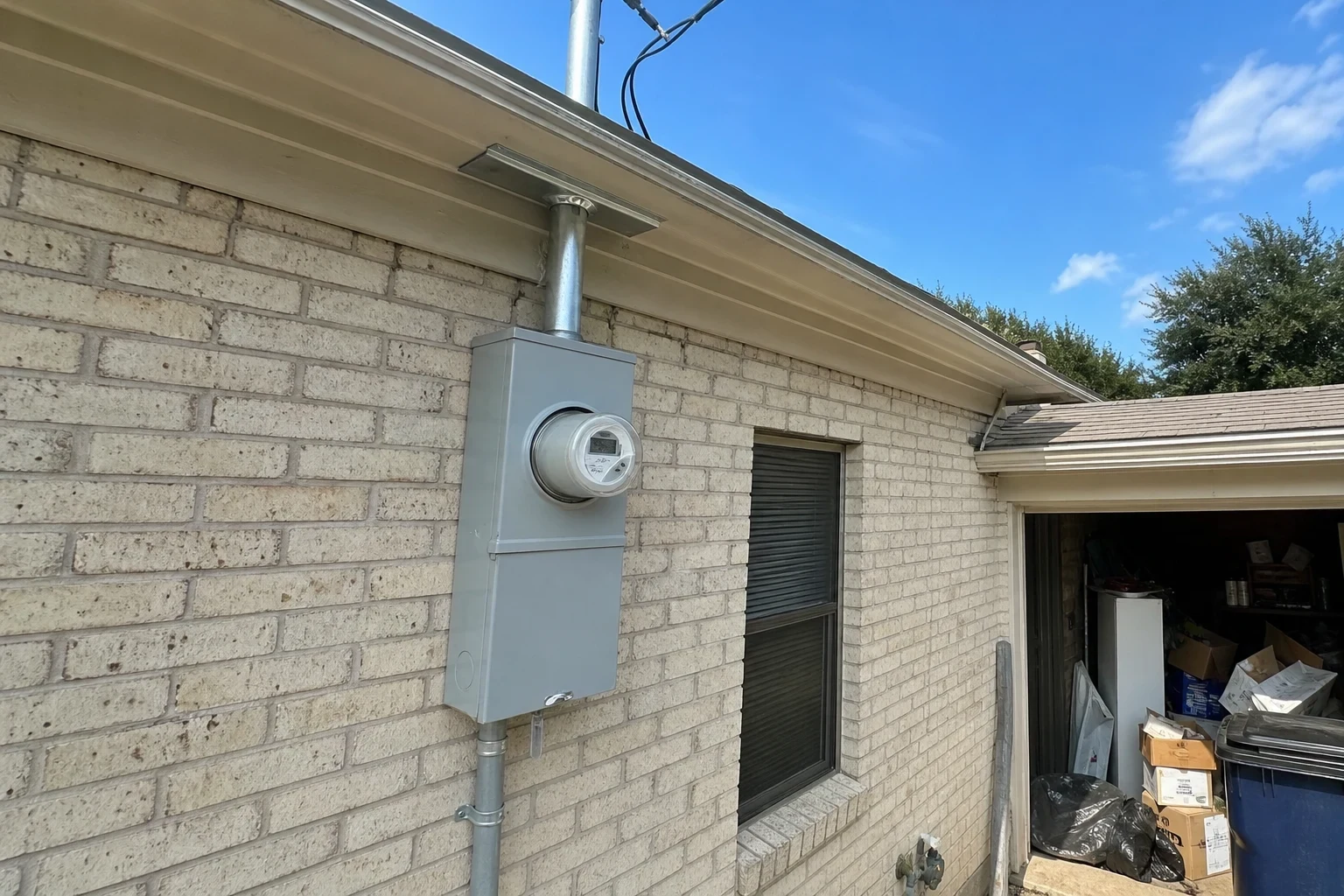
We will test your circuits, open a few boxes and give you a written scope, whether that is a full rewire, a partial one or a repair.