ServicesEV Charger Installation
EV Charger Installation in Grand Prairie
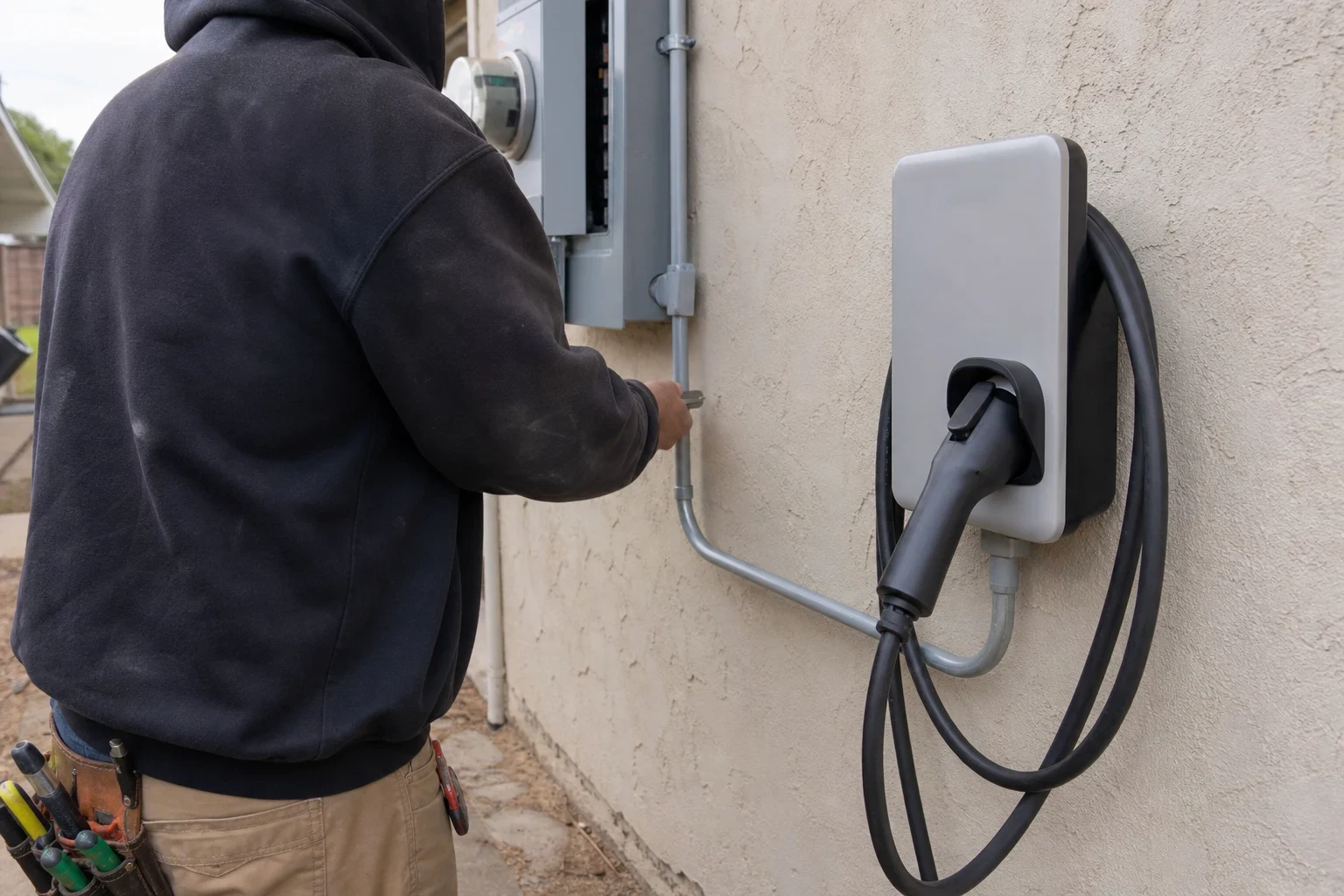
Your Level 2 charger gets its own 240-volt circuit, matched to the car, the charger and what your panel can really handle. We run the numbers on your existing load first, route the wire cleanly to the garage or driveway, and have the circuit permitted and inspected.
A Charger Circuit Built Around Your Panel
A Level 2 charger pulls a steady current for hours at a stretch. Because of that, the electrical code classifies it as continuous, and the breaker and wire must be rated for 125 percent of what the charger puts out. A 48-amp wall unit needs a 60-amp breaker and conductors to match. A 40-amp unit needs a 50-amp circuit. Getting this right keeps the breaker, wire and terminals from running hot every night.
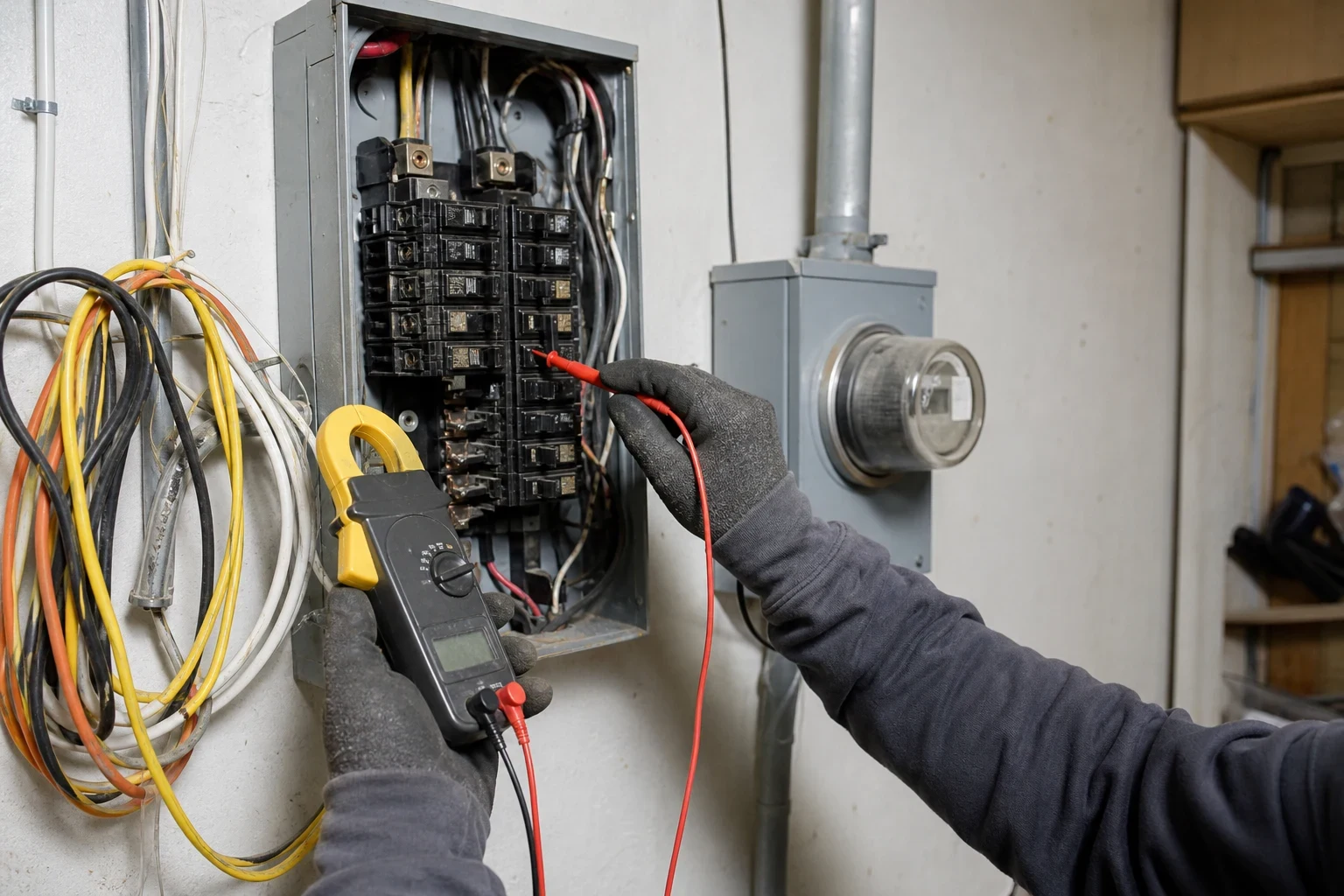
Before we recommend a charger size, we look at the panel. Many houses around the metro still run on 100- or 125-amp service, and a central AC system already takes a large share of that in summer. We do a load calculation so you know whether your home can take a 48-amp charger as is, needs a smaller setting, or would do better with a load management device or a panel upgrade.
What the Installation Includes
- 01
Load calculation
We add up your existing loads, including the AC, range, dryer and water heater, against your service size. That number decides the charger amperage we recommend.
- 02
Dedicated 240-volt circuit
A new double-pole breaker and copper conductors sized for the continuous load, run in conduit or approved cable from the panel to the charger location.
- 03
Hardwired unit or NEMA 14-50 outlet
We mount and wire your hardwired charger, or install a heavy-duty 14-50 receptacle with the GFCI protection the code now requires for 240-volt garage outlets.
- 04
Outdoor-rated hardware
For driveway or carport locations we use weather-rated boxes, sealed fittings and UV-resistant conduit so summer sun and spring storms don't break down the run.
- 05
Permit and inspection
We handle the permit paperwork and book the inspector, following whatever the local jurisdiction requires. Once the circuit passes, we go over the charger's settings with you.
Questions about EV Charger Installation?
Call(682) 343-9645Signs It's Time to Have a Charger Installed
Level 1 can't keep up
An ordinary 120-volt wall receptacle trickles in a handful of miles for each hour the car sits plugged in. If your car isn't full by morning, a Level 2 circuit fixes that.
An extension cord in the garage
Running a charging cord through a household extension cord overheats the plug and the cord. Stop doing it and have a proper outlet or hardwired unit put in.
Breakers trip while charging
A charger sharing a circuit, or pulling more than the circuit is rated for, will trip the breaker. It can also point to a loose connection that is heating up, which our electrical repair work covers.
A new or second EV on the way
Two cars on one service is a load question. We can split capacity between two chargers or add a load-sharing setup so both charge without overloading the panel.
A warm outlet or scorched plug
Discoloration on a 14-50 receptacle usually means a cheap outlet or loose terminal. Unplug the car and have it replaced with an industrial-grade receptacle.
How Installation Day Goes
- 1
Panel check and route planning
We open the panel, confirm breaker space and bus rating, and plan the shortest practical wire path to where you park. Distance matters because longer runs can need heavier wire to limit voltage drop.
- 2
Running the circuit
We install the breaker, pull the conductors through conduit along the garage wall or through the attic, and mount the charger or receptacle at a height that suits your cable reach.
- 3
Testing under load
We torque every terminal to spec, verify voltage at the charger and run the car through a charging session to confirm it holds full output without tripping.
- 4
Inspection and handoff
After the inspector signs off, we show you the breaker, set the charger's amperage limit to match the circuit, and leave the garage swept.
What Moves the Cost
Most of the price comes down to how far the wire travels and whether your panel has room for the load. We look at both on the service visit, then explain the job line by line before work starts.
- Panel capacity
- If the load calculation shows your service can't carry the charger, you'll need a load management device or a panel upgrade. That is the single biggest swing in cost.
- Distance and path
- A charger on the garage wall behind the panel is a short run. A detached garage or driveway post means more wire, possibly trenching, and heavier conductors.
- Charger amperage
- A 60-amp circuit uses larger copper and a larger breaker than a 40-amp one. Copper prices move, and the wire is a real part of the material cost.
- Hardwired or plug-in
- A 14-50 receptacle with GFCI breaker and a hardwired unit cost differently. Some chargers nuisance-trip on GFCI breakers, which can make hardwiring the better choice.
EV Charger Questions
Can the charger go in my garage?
Yes, and an attached garage is where most of them go. We place it close to your car's charge port so the cable reaches easily. Since garages here can pass 100 degrees in July, we keep the unit clear of water heaters and other heat sources that can cause it to slow its charging.
Will adding a charger mean a panel upgrade?
Not necessarily. Plenty of 200-amp panels carry a 48-amp charger without trouble. With 100- or 125-amp service the load calculation often falls short, and we'll lay out your options: a lower charger setting, a load management device or a panel upgrade.
Is a hardwired charger or a 14-50 outlet better?
Hardwiring allows higher amperage, avoids wear on plug contacts and sidesteps GFCI nuisance trips. The 14-50 outlet's one real advantage is that a portable charger unplugs and comes with you when you move. If the car charges every night, we usually suggest hardwiring.
How long will the install take?
A simple garage job with a short wire run generally takes part of a day. Long runs, attic routing or trenching out to a driveway add time. When the inspection happens depends on the local jurisdiction's calendar.
Can I have the charger mounted outdoors?
Yes, provided the charger carries an outdoor rating. We use weather-rated boxes and sealed conduit fittings and set the unit where heavy rain won't leave it standing in water.
Get Your Car Charging Overnight
Tell us your car, your charger and where you park. We'll schedule a visit to check your panel and plan the circuit.