ServicesGenerator Installation
Generator Installation in Grand Prairie
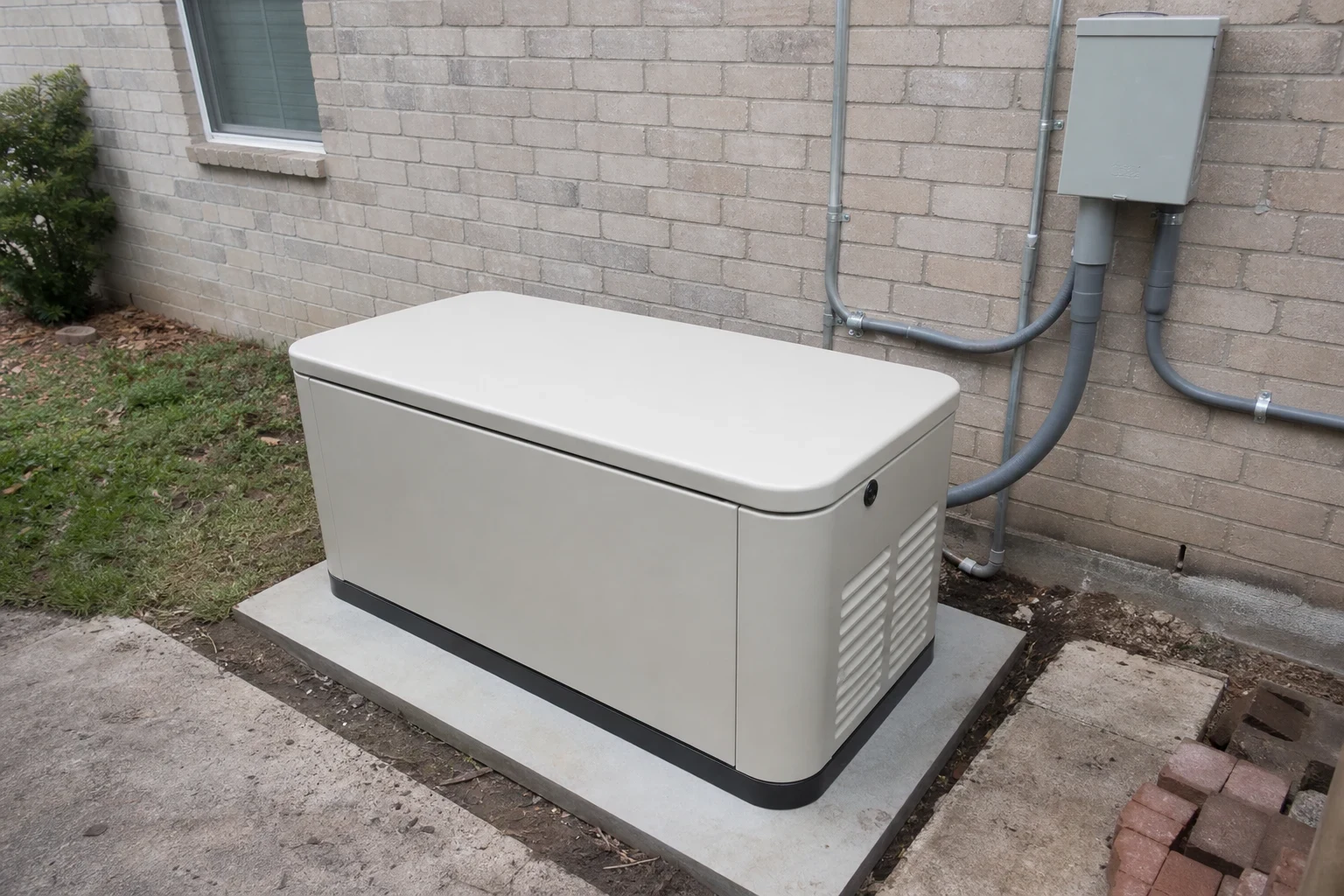
We set standby generators and wire inlet-and-interlock setups for portables, matched to the loads your home really runs. You get a code-compliant transfer switch, the permit and inspection handled as the local jurisdiction requires, and a startup test you can watch before we pack up.
Why the Install Matters as Much as the Generator
The wiring that links a generator to your panel decides how well it serves you. The transfer switch stops generator power from flowing back onto utility lines, and it must be rated for your service. The circuits on it must match what the unit can start. We settle those details before the unit is set.
Our installs are mostly one of two kinds. A standby unit burns natural gas or propane and comes on by itself through an automatic transfer switch. A portable setup pairs an outside inlet box with an interlock kit on your panel, so you plug in safely rather than snaking extension cords through a window.
In North Texas the power usually goes out in summer thunderstorms or winter ice, right when heating or cooling matters most. So we size around your HVAC, not only lights and the refrigerator.
What You Get With the Install
Sizing by load
Together we pick the circuits that have to stay on in an outage, then add up their running and starting watts. An AC compressor briefly pulls several times its running current when it starts, and that spike usually decides the generator size.
Transfer switch or interlock kit
Standby units get an automatic transfer switch, either a service-rated whole-house model or a smaller one serving a dedicated subpanel. Portables get a listed interlock kit plus a breaker sized to the inlet's amperage.
Modules to manage large loads
If a smaller generator has to run central AC, we can fit load-shedding modules or a compressor soft-start kit. These spread out the heavy loads so the unit isn't overloaded.
Placement and pad
We find a location that meets the manufacturer's distance rules from windows, doors and air intakes so exhaust stays outside, and set a level base there. At the same time we plan the conduit path back to the transfer switch.
Working with the gas plumber
Gas lines are a plumber's job. We size the line together with a gas plumber and tell you early if the gas utility may need to put in a larger meter.
Permit, inspection and first start
We obtain the permit the local jurisdiction requires and are there for the inspector. Then we stage an outage so you can see the switch transfer the load and hand it back.
Signs a Generator Belongs on Your List
Outages that last past a day
If an ice storm or a downed line has left you without power for long stretches before, a short-run battery or a flashlight drawer won't cover it.
Medical equipment at home
Oxygen concentrators, CPAP machines and powered lift chairs need steady power. A standby unit switches over without anyone having to go outside.
Extension cords through a window
Running a portable this way is risky for carbon monoxide and hard on the cords. An inlet box and interlock fix that for a fraction of a standby system's scope.
A sump pump, well or freezer full of food
These loads cost real money when they stop. Backing up a few critical circuits is often enough.
How the Job Runs
- 1
Site and panel survey
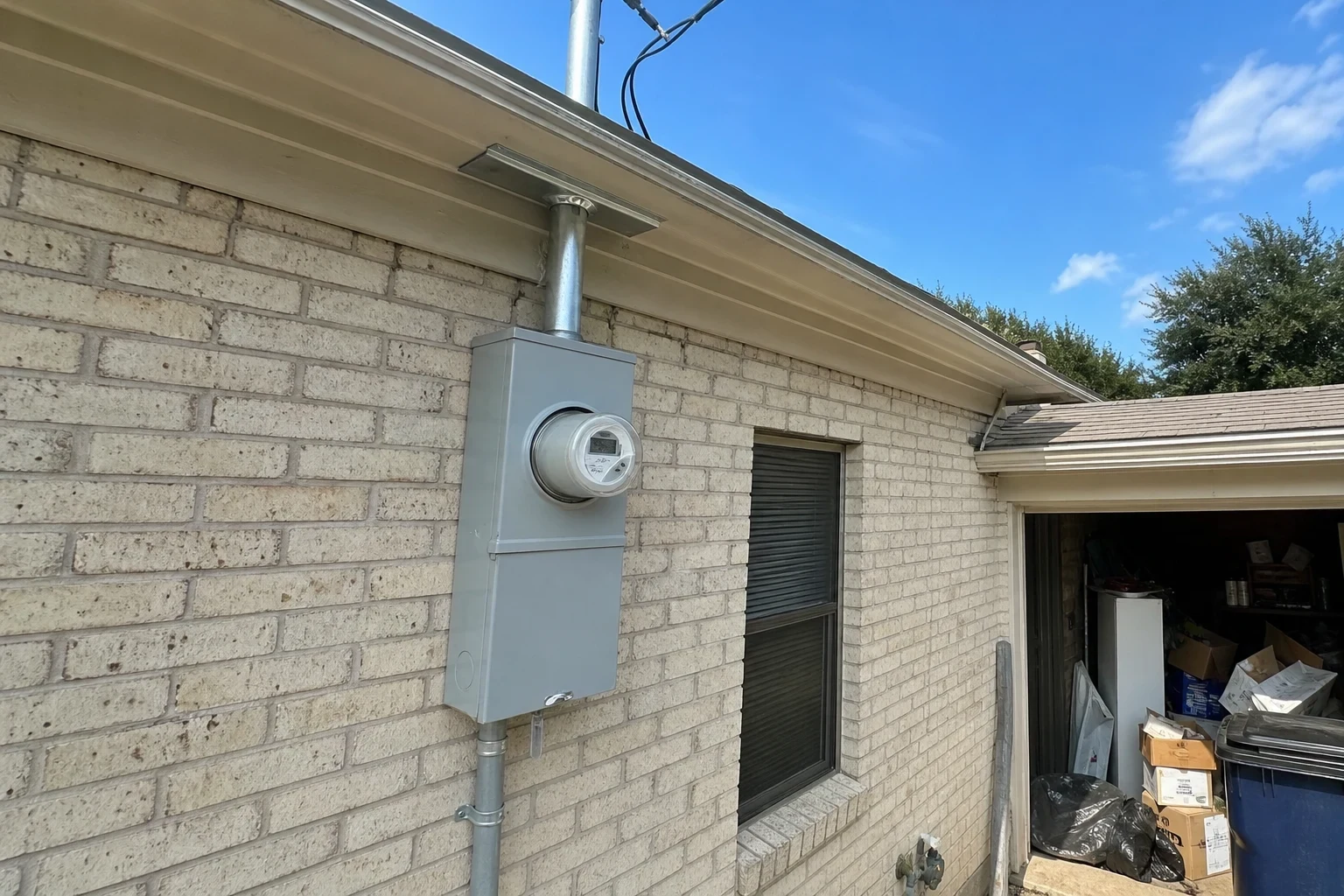
On the service visit we look at your panel, measure the run to a likely pad spot and check the gas meter. If your panel is full or near the end of its life, we'll tell you, because a panel upgrade may need to come first.
- 2
Written scope
You get a line-item scope listing the generator size, the transfer switch type, which circuits are covered and what the permit involves. Nothing is ordered until you approve it.
- 3
Install day
We set the pad and unit, run conduit and conductors, and mount the transfer switch. Your power is off for a few hours while we land the switch at the service. We tell you the window ahead of time.
- 4
Inspection and test
After the inspection passes and the fuel is connected, we start the unit and simulate an outage. We set the weekly exercise schedule and walk you through the controls.
What Changes the Cost of a Generator Install
Three parts drive this price: the generator, the switch that connects it and the fuel that feeds it, and each depends on your home. We quote only after seeing your panel and the path to the pad. Your written scope breaks every piece out on its own line.
- Generator size and fuel
- A unit that can carry central air costs more than one sized for essentials. Natural gas and propane setups also differ in what has to be run to the pad.
- Transfer switch type
- A whole-house, service-rated automatic switch is a bigger job than an interlock kit or a smaller switch feeding a few essential circuits.
- Distance and routing
- Longer conduit runs need larger conductors to limit voltage drop, and trenching or routing around a finished slab adds labor.
- Panel condition
- An older or full panel may need breaker work, a subpanel or a full replacement before a transfer switch can be added safely.
- Gas meter and permit
- If the meter can't supply the generator along with your furnace and water heater, the utility upgrade and piping add to the project. Permit fees are set by the jurisdiction.
Questions About Installing a Generator
Something not covered here? (682) 343-9645
Is a standby unit or a portable hookup right for me?
That comes down to how long outages last and who is at home. An inlet and interlock for a portable is the simpler job, but someone has to start and refuel it. A standby unit kicks on by itself in seconds. At the visit we show you what each one would power in your house.
Will a generator keep my central AC running?
It can, when it is sized for the compressor's startup surge. A soft-start kit or load-shedding modules may let a mid-size unit manage it. The load calculation answers this, so nobody has to guess.
How long is the install?
On most standby jobs the electrical work takes one to two days at your home. The full timeline depends on permit approval, equipment delivery, gas work and the inspection date, and we lay out that order for you at the start.
Will you handle the permit?
Yes. We get the electrical permit your local jurisdiction requires and meet the inspector on site. The gas hookup has its own permit and inspection, and we time our work with the plumber's.
What upkeep does a generator need once it's in?
A standby unit runs a short self-test every week, but it still needs oil, filter and battery service on a schedule, plus checks on the transfer switch. That work is on our Generator Service & Repair page. To avoid fuel entirely, see Home Battery Backup Systems.
Get Backup Power Sized Before the Next Outage
We'll look at your panel, your gas meter and where the unit can go, then give you a written scope. Book the service visit when it suits you.