ServicesLighting Installation
Lighting Installation in Grand Prairie
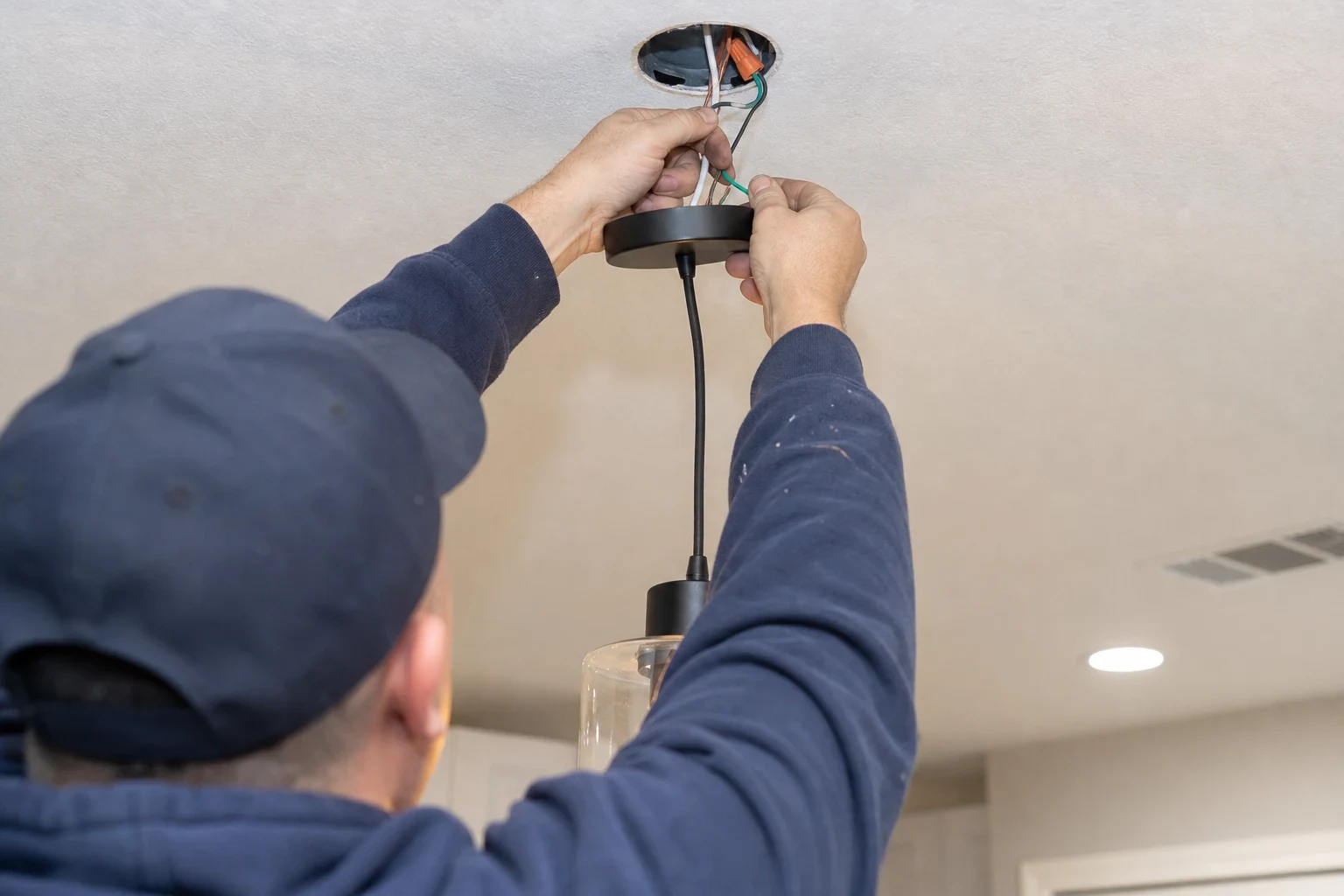
We install recessed lights, fixtures, ceiling fans, dimmers and outdoor lighting in your home. Every light gets a box rated for its weight, a housing rated for its location, and a switch matched to the LED it controls, so it works quietly and lasts.
What Lighting Installation Covers
Most lighting jobs look simple from the floor. The work that decides whether a light lasts happens above the ceiling and inside the wall: the box it hangs from, the cable feeding it, the insulation around it, and the dimmer controlling it. We plan each light around those parts, not just around where you want it to shine.
Attics in North Texas run far hotter than the rooms below them through the summer. That heat shortens the life of LED drivers and cooks the insulation on older fixture wiring. We use IC-rated, airtight housings that can sit in contact with insulation, and we check the existing wire at every fixture location before we connect anything new to it. If a circuit needs more than a lighting install can fix, we'll tell you and point you to electrical repair or whole-home rewiring.
What We Install
Recessed and wafer lights
We cut, fish cable and set new-construction cans, remodel cans or slim wafer LEDs. We lay them out by beam spread and ceiling height so a room lights evenly instead of in spots.
Fixtures and chandeliers
Heavy fixtures need a box and support rated for their weight. We swap out undersized plastic boxes and add bracing between joists where a chandelier or pendant calls for it.
Ceiling fans
A fan needs a fan-rated box fastened to framing, or it will wobble and loosen over time. Where you want the fan and light on separate switches, we check for an existing three-wire run or pull one.
Dimmers and smart switches
Old incandescent dimmers make many LEDs flicker or buzz. We fit dimmers listed for LED loads, and we confirm a neutral is in the box before installing smart switches that require one.
Porch, soffit and yard lights
Anything mounted outside needs a fixture listed for wet locations and a box that keeps out driving rain, plus a weatherproof in-use cover on any receptacle. For low-voltage path and garden lights, we mount the transformer securely beside a protected outlet. Line-voltage circuits outdoors get GFCI protection wherever code calls for it.
Signs Your Lighting Needs Work
LEDs flicker or hum
This usually points to a dimmer that isn't rated for LED loads, or a loose connection in the box. A matched dimmer often fixes it, but a loose splice needs attention before it overheats.
Brittle wire at old fixtures
In older homes, fixture wire insulation can crack after years of heat from incandescent bulbs. If it crumbles when touched, the connection isn't safe to reuse as is.
A fan that wobbles or drifts
A wobble that balancing kits won't cure often means the fan is hanging from a light-duty box. That box can work loose from the framing over time.
Outdoor lights that quit after storms
Water inside a fixture or a box that isn't sealed for wet locations will trip breakers and corrode terminals. Spring storms tend to expose these first.
Rooms with one dim center light
Many homes were built with a single ceiling fixture per room. Adding recessed or layered lighting is a common project, and it's worth checking circuit load before adding fixtures.
How a Lighting Job Runs
- 1
Walk the space and the attic
We look at the ceiling framing, insulation depth and existing wiring, and test the circuit you'd be adding to. That tells us where lights can go and whether the circuit can carry them.
- 2
Agree on layout and parts
We mark fixture locations, confirm housings, trims and color temperature, and match dimmers to the lights. You know the full scope before work starts.
- 3
Install and protect your home
We cover floors and furniture, cut clean openings, fish cable through the attic or walls, and fasten each box to framing. When the job calls for a permit, we pull it and book the inspection with whichever authority covers your address.
- 4
Run every control, then clean
Each switch and dimmer gets cycled from full bright to its lowest setting, and we trip and reset every outdoor GFCI. Then we vacuum up the drywall dust before we leave.
What Moves the Cost of Lighting Work
Lighting prices depend on what's behind the ceiling more than on the fixture itself. Once we've seen the attic and tested the circuit, we can give you a clear, itemized price before any work begins.
- Number and type of lights
- A single fixture swap on an existing box is quick. A room of new recessed lights takes cutting, cable runs and more time.
- Attic access and ceiling type
- Open attics with room to crawl make cable runs easier. Vaulted ceilings, second-floor rooms and tight attics mean fishing wire through finished walls.
- Condition of existing wiring
- Brittle fixture wire, missing grounds or an overloaded circuit add work before new lights can go up.
- Controls and outdoor needs
- Smart switches without a neutral, three-way switching, new circuits or trenching for exterior lights each add parts and labor.
Common Lighting Questions
Something not covered here? (682) 343-9645
Is it okay to put recessed lights in a ceiling with blown-in insulation?
Yes, provided the housings carry an IC rating, which means they can touch insulation without overheating. We also choose airtight housings to keep cooled air from escaping into a hot attic.
What causes LED bulbs to flicker on a dimmer?
Many older dimmers were made for incandescent bulbs and can't control the small wattage of LEDs smoothly. Swapping in a dimmer listed for LEDs usually solves it. If the flicker stays, we look for a loose connection in the box.
Can I supply the fixtures myself?
Yes. Before installing, we confirm each fixture is rated for where it goes, such as damp or wet ratings for porches and bathrooms, and that the mounting can hold its weight.
Does new lighting require a permit?
It depends on the change. Putting a new fixture on a box that is already there usually doesn't, while new cable runs or an added circuit usually do. When a permit applies, we get it and schedule the inspection with the city or authority for your address.
How long will a recessed lighting job take?
Most single rooms with easy attic access are finished in a day. Ceilings with no attic above, or jobs needing a new circuit, run longer, and we give you a realistic schedule after the walkthrough.
Ready for Better Light in Your Home
Tell us which rooms or outdoor spaces you want lit, and we'll set up a visit to check the attic, the wiring and the circuit before we plan the layout.