ServicesSurge Protection
Whole-Home Surge Protection in Grand Prairie
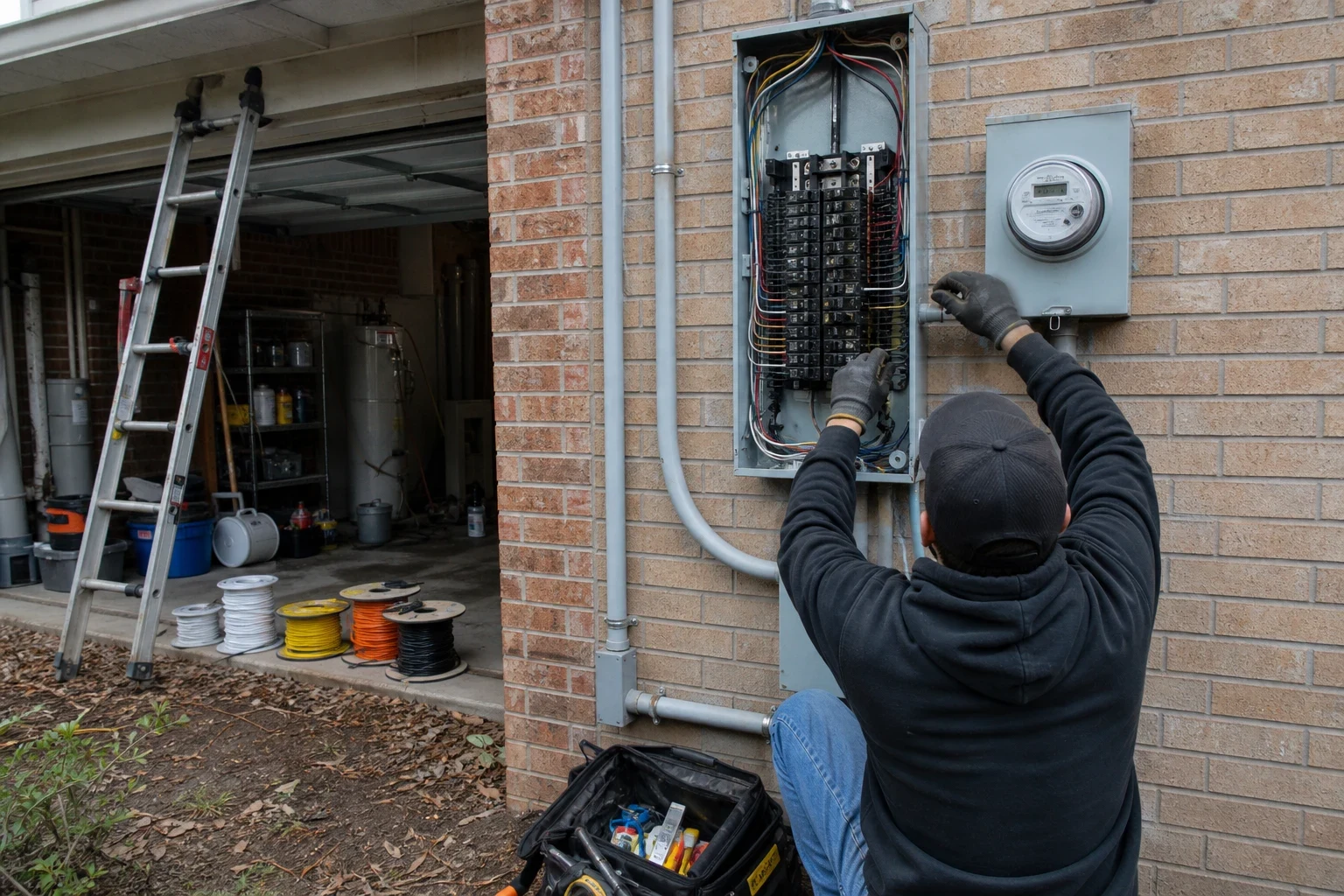
We install a surge protective device at your breaker panel, then check the grounding it depends on. That stops voltage spikes from lightning, grid switching and your own AC compressor before they reach the circuit boards in your appliances, HVAC controls and electronics.
What a Panel Surge Protector Actually Does
A surge is a voltage spike that lasts a few millionths of a second. It can come in from the utility lines during a thunderstorm or when the grid switches loads. Most surges, though, start inside your home: every time an AC compressor, refrigerator or pool pump motor cycles off, it kicks a small spike back onto the wiring. One big hit can kill a furnace control board. Thousands of small ones slowly wear down the electronics in a TV, washer or garage door opener.
A whole-home surge protective device, or SPD, mounts at or beside the main panel and connects to both hot legs and the neutral and ground bus. When voltage climbs past its clamping level, it shunts the excess to ground. That last part is why we never install one without testing the grounding electrode system first. An SPD tied to a corroded ground rod or a loose neutral-to-ground jumper has nowhere to send the energy.
North Texas spring storms bring plenty of lightning, so a panel-level unit is a reasonable addition to almost any house. Newer editions of the electrical code also call for surge protection when a dwelling's service is replaced, so if you are planning a panel upgrade, we fold it into that job.
What the Installation Includes
- Panel and capacity review
- We confirm your panel has two open spaces for a double-pole breaker, or room for a lug-mounted or external unit. Older panels with no spare space sometimes need a tandem breaker swap or a different mounting approach.
- Grounding connection test
- We trace the conductor from your panel out to the ground rod and check how tightly it lands there. We also look at the clamps on metal water and gas piping. Anything loose or corroded gets repaired before the SPD goes in.
- Type 2 SPD installation
- We install a load-side Type 2 device sized for residential service, keeping the leads as short and straight as we can. Long, looped leads add impedance and raise the voltage that gets through to your circuits.
- Coax and data line protection
- Surges also ride in on cable TV, internet and phone lines. Where those enter your home, we can add protectors tied into the same grounding point so every path shares one reference.
- Point-of-use guidance
- For a home office, gaming setup or theater rack, we explain which plug-in protectors are worth having as a second layer behind the panel unit.
Signs Your Home Needs Surge Protection
Electronics failing early
Microwaves, smart TVs or chargers dying well before their time often point to repeated small surges wearing down components.
A dead control board after a storm
If an HVAC board, pool controller or garage opener quit right after lightning nearby, the next storm can do the same to something else.
Lights blink when the AC kicks on
A visible flicker when a big motor starts or stops means the wiring is seeing voltage swings. We check for loose connections too, since that can be the real cause.
You added expensive equipment
A new EV charger, battery system, variable-speed HVAC unit or generator transfer switch is full of sensitive electronics worth guarding.
Your existing SPD shows a fault
Most units have an indicator light. If it is off or red, the protective components have sacrificed themselves and the device needs replacing.
What Moves the Price
Most surge protection jobs are straightforward, but the condition of your panel and grounding decides how much work sits around the device itself. We price it after seeing your setup, and you approve the number before we start.
Panel space and type
A panel with open breaker spaces is the simplest case. A full or obsolete panel may need rearranging, tandem breakers or an external enclosure.
Grounding repairs
Replacing a corroded ground rod clamp, adding a second rod or restoring a missing connection to metal piping adds labor and material.
Device rating
SPDs vary in surge current rating and in how low they clamp voltage. We match the unit to your service size and what you are protecting.
Extra entry points
Adding protection on coax, phone or data lines adds parts and time, especially if the lines enter far from the panel.
How the Visit Runs
- 1
Walkthrough and questions
We ask what equipment you want protected and whether you have lost anything to a surge. Then we look at the panel, the service entrance and where cable and internet lines come in.
- 2
Grounding checks
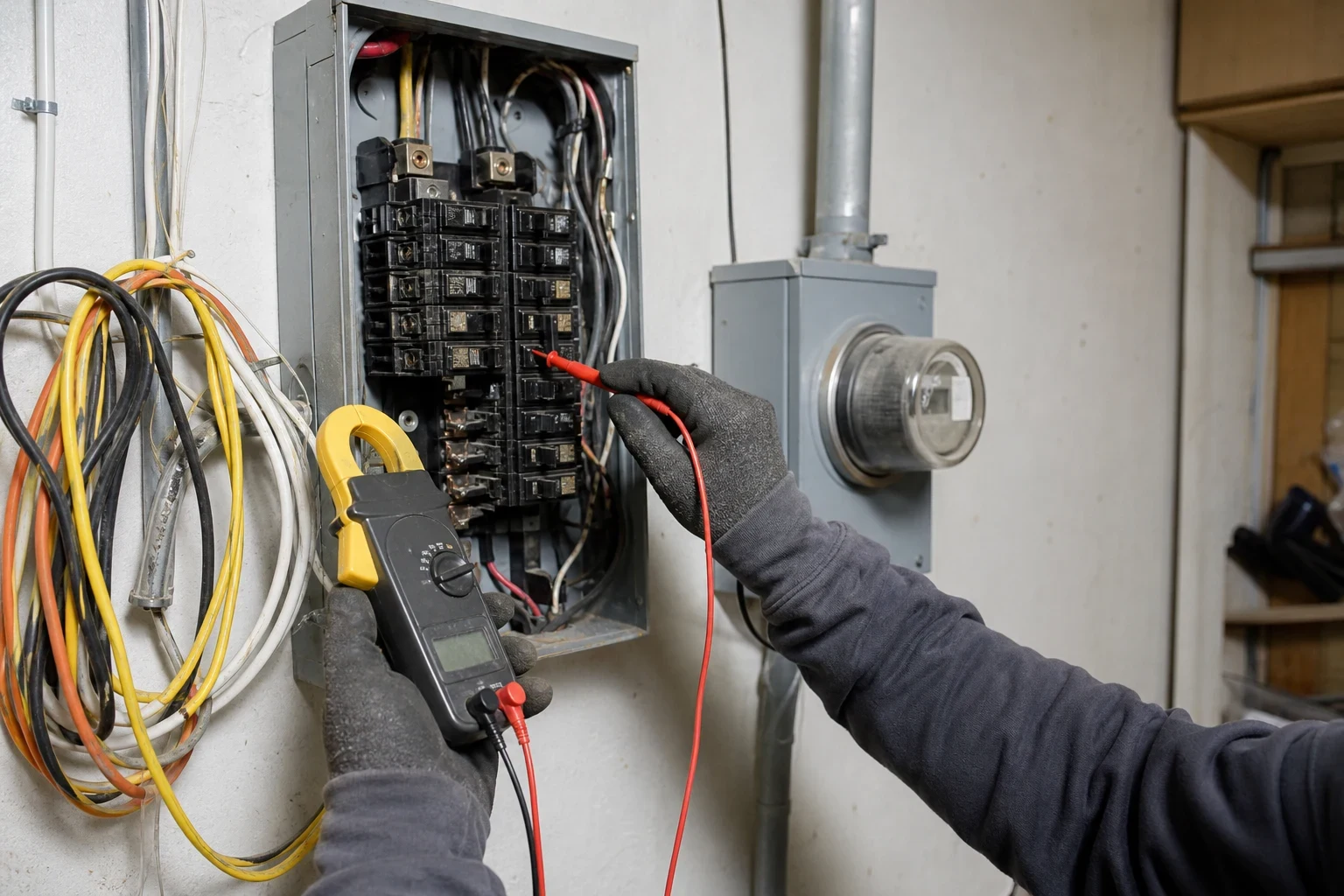
We test and inspect the grounding electrode system and its connections. If something needs fixing, you get a clear explanation and a price before we touch it.
- 3
Power down and install
We shut off the main, mount the SPD, land the conductors and torque every connection to spec. Power is usually off for a short stretch, and we tell you before it goes.
- 4
Verify and walk you through it
With power restored, we confirm the indicator shows protected and show you where to look for it after future storms. Any permit and inspection required by the local jurisdiction is handled as part of the job.
Surge Protection Questions
Can a whole-home surge protector handle lightning hitting my house?
A strike that lands on the structure itself carries more energy than any residential surge device is built to absorb. What an SPD does handle is the much more common situation: spikes pushed onto utility and service lines by strikes nearby and by grid events. Backed by sound grounding, it sharply reduces the damage those spikes do.
Do I still need plug-in surge strips?
For sensitive or costly gear, yes, as a second layer. The panel unit clamps big incoming surges, and a quality point-of-use protector catches the smaller residual spike close to the device. Cheap strips with no rating info are not worth much.
How long does a surge protector last?
There is no set number of years. Every spike the device clamps uses up a little of its internal metal oxide varistors, and one large event can spend them all at once, which is how it is designed to fail. Glance at the indicator light after a big storm, and plan on a new unit once it shows a fault.
Can you add it when you upgrade my panel?
Yes, and that is the most efficient time to do it. Newer code editions call for surge protection on service replacements anyway. See our Panel Upgrades page for how that job runs.
Does a surge protector help my generator or battery system?
It protects the inverter and control electronics in those systems from incoming spikes. If you have or plan a standby generator or home battery, we place the SPD so it covers the circuits those systems feed.
Protect the Electronics You Already Own
We will check your panel and grounding, then install a surge protector sized for your home. Book a service visit and we will set a time that suits you.