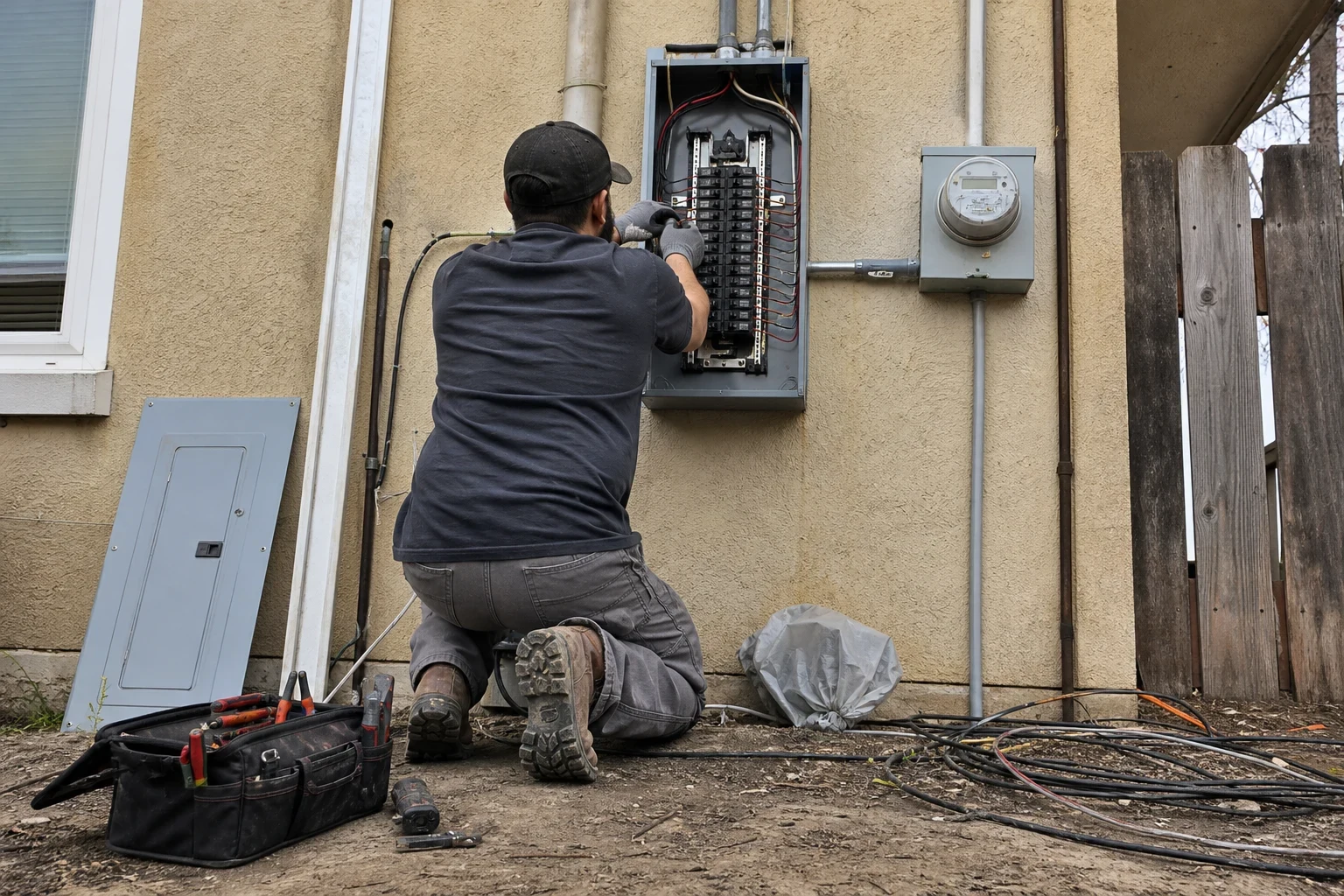
ServicesPanel Upgrades
Panel Upgrades in Grand Prairie
We replace worn, undersized and problem-brand breaker panels with new service equipment sized to what your home actually draws. Each upgrade starts with a load calculation and includes the permit and inspection. It finishes with a labeled panel you can read at a glance.
What a Panel Upgrade Actually Replaces
A panel upgrade replaces the enclosure, bus bars, main breaker and branch breakers. When the service size goes up, it often includes the meter base and service entrance conductors too. Many houses were built with a 100-amp panel when an electric range and a dryer were the biggest loads. Add central air, a second fridge, a home office and an EV, and that panel runs close to its limit.
Here the long summer is when a tired panel shows itself. The air conditioner compressor pulls a heavy inrush current every time it starts, and a panel with loose connections or a worn main breaker heats up under that cycling. We size the new service to what you run now and what you plan to add, not to a guess.
An upgrade is not always the answer. If the panel is sound and the trouble is one failing breaker or a loose lug, we tell you that and handle it as an electrical repair or a torque and clean visit instead.
What's Included in Our Panel Upgrades
- A written load calculation
- We total your connected loads using the National Electrical Code method: HVAC, water heater, range, dryer, pool pump and anything planned. That number tells us whether 150, 200 or more amps fits your home. You don't pay for capacity you won't use, and you don't come up short later.
- New panel and breakers
- A new enclosure, bus and breakers from one manufacturer, with AFCI and GFCI protection where current code requires it. We move each circuit over, re-terminate the conductors and torque every lug to the manufacturer's spec. Wire that is too short or heat-damaged gets spliced or replaced properly.
- Meter base and service conductors
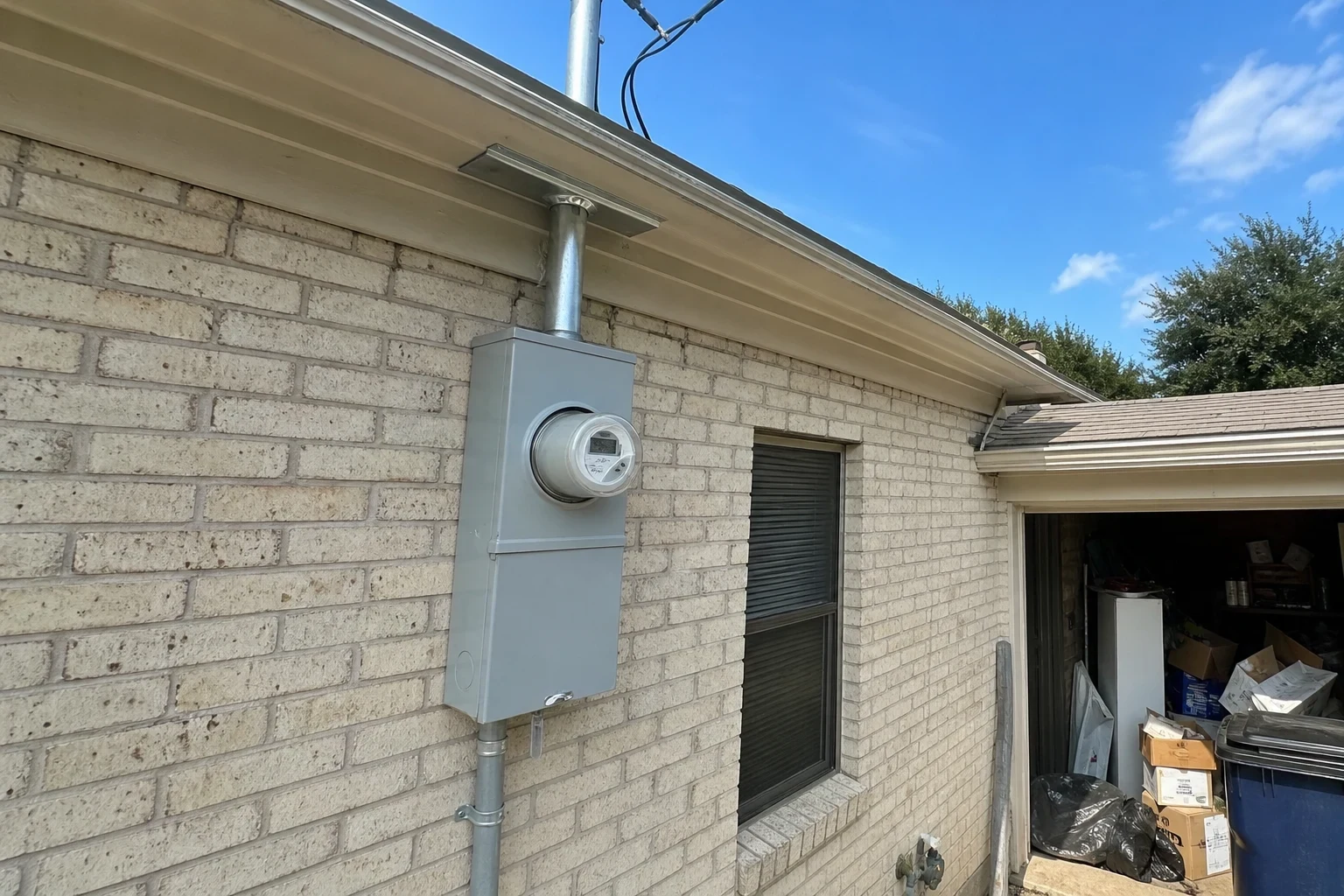
- A larger service needs a matching meter base and service entrance cable, and sometimes a new mast. We coordinate the disconnect and reconnect with your utility so the outage is planned.
- Grounding and bonding
- We check the ground rods, grounding electrode conductor and bonds to water and gas piping, then bring them up to current requirements. A weak ground lets surges and fault current go where they shouldn't.
- Permit, inspection and labels
- The paperwork is ours to file, and we're on site when the inspector comes through. Every breaker gets a typed label naming the room or appliance it feeds.
Signs Your Panel Needs an Upgrade
Breakers trip when the AC starts
A main or HVAC breaker that trips on hot afternoons points to a service running at its limit or a breaker that has weakened from heat.
A brand with a known history
Federal Pacific Stab-Lok and Zinsco panels have a documented record of breakers that fail to trip under overload. When we find one, we recommend replacement and show you why.
Heat, buzzing or scorch marks
A warm cover, a buzzing breaker or browned insulation at a lug means a connection is arcing or overheating. Turn that circuit off and have it looked at soon.
No open slots left
Double-tapped breakers, stacked tandems and a full bus mean past work was squeezed in. Adding a circuit safely needs room.
Big additions on the way
An EV charger, generator or home battery backup system often needs more capacity or a panel built to accept it.
What Moves the Cost of a Panel Upgrade
Two panel jobs can look alike from the driveway and price very differently. Most of the difference comes from what has to change outside the panel itself. We price the full scope in writing after the service visit, so you know what's included before any work starts.
Service size
Staying at the same amperage costs less than moving from 100 to 200 amps, which usually adds a new meter base and heavier service conductors.
Panel location
Replacing a panel in place is simpler than relocating one out of a closet or bathroom where current code no longer allows it.
Condition of existing wiring
Brittle insulation, aluminum branch circuits or undersized conductors add splicing, pigtailing or replacement.
Code items found
Missing grounding, absent bonding or required AFCI and GFCI protection are added as part of an inspected job.
How a Panel Upgrade Day Goes
- 1
Service visit and load review
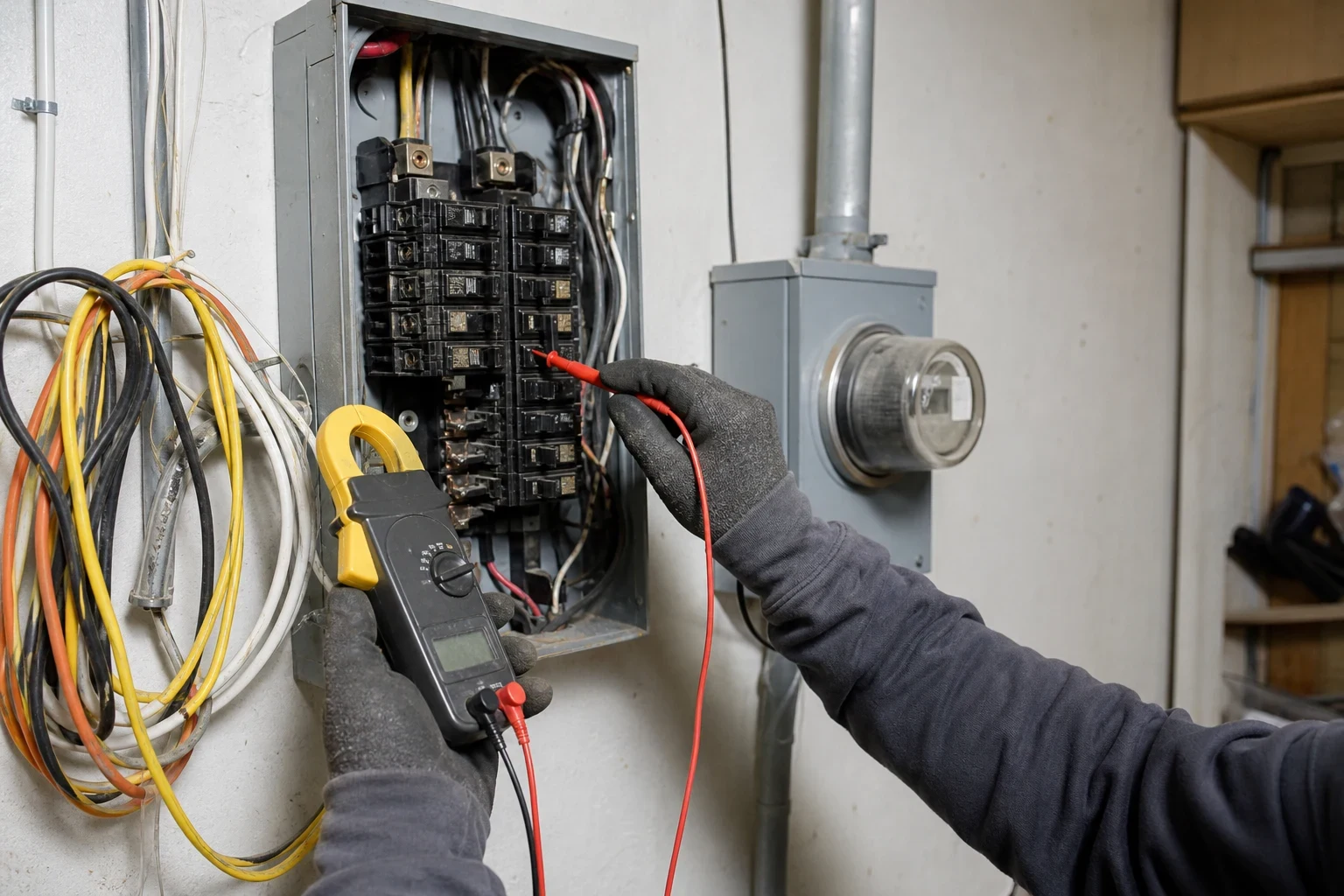
We open the panel, check the meter base and grounding, and list your current and planned loads. You get a clear recommendation, including when a repair will do.
- 2
Written scope and permit
You see the panel size, the breakers and every code item we'll address before we start. We file the permit and schedule the utility work.
- 3
Install day
Power is off for most of the working day. We give you the window ahead of time so you can plan around food in the fridge and any medical equipment. We swap the equipment, move each circuit and test as we go.
- 4
Inspection and walkthrough
After the inspection passes and power is restored, we show you the main breaker, the labels and any AFCI or GFCI breakers and how to reset them.
Panel Upgrade Questions
How long does a panel change take?
Most straightforward panel swaps are done in one working day, with power off for most of it. A service size increase or panel relocation can take longer because of utility coordination. We give you the timeline after the service visit.
Do you pull the permit?
Yes. Filing the electrical permit is part of every panel job we take on, and we book the inspection and meet the inspector at your home. In most cases the utility won't energize an upgraded service until that inspection passes, so the permit is more than paperwork. It also leaves you a record of inspected work if you ever sell.
Do I really need 200 amps?
Not always. The load calculation decides it. A modest home with gas appliances may do fine at 150 amps, while an all-electric home with an EV and a pool usually needs 200 or more.
Can my current panel handle an EV charger?
Sometimes. If the load calculation shows spare capacity and you have open slots, we may add the circuit without an upgrade, or use a load-managing charger. We tell you which applies.
Do I need to be home during the work?
Someone should be there at the start and for the final walkthrough. In between, you can leave, though the house will have no power.
Find Out What Your Panel Can Carry
We'll check your panel, run the numbers on your loads and tell you plainly whether you need an upgrade, a repair or nothing at all.