ServicesTorque & Cleans
Torque & Cleans in Grand Prairie
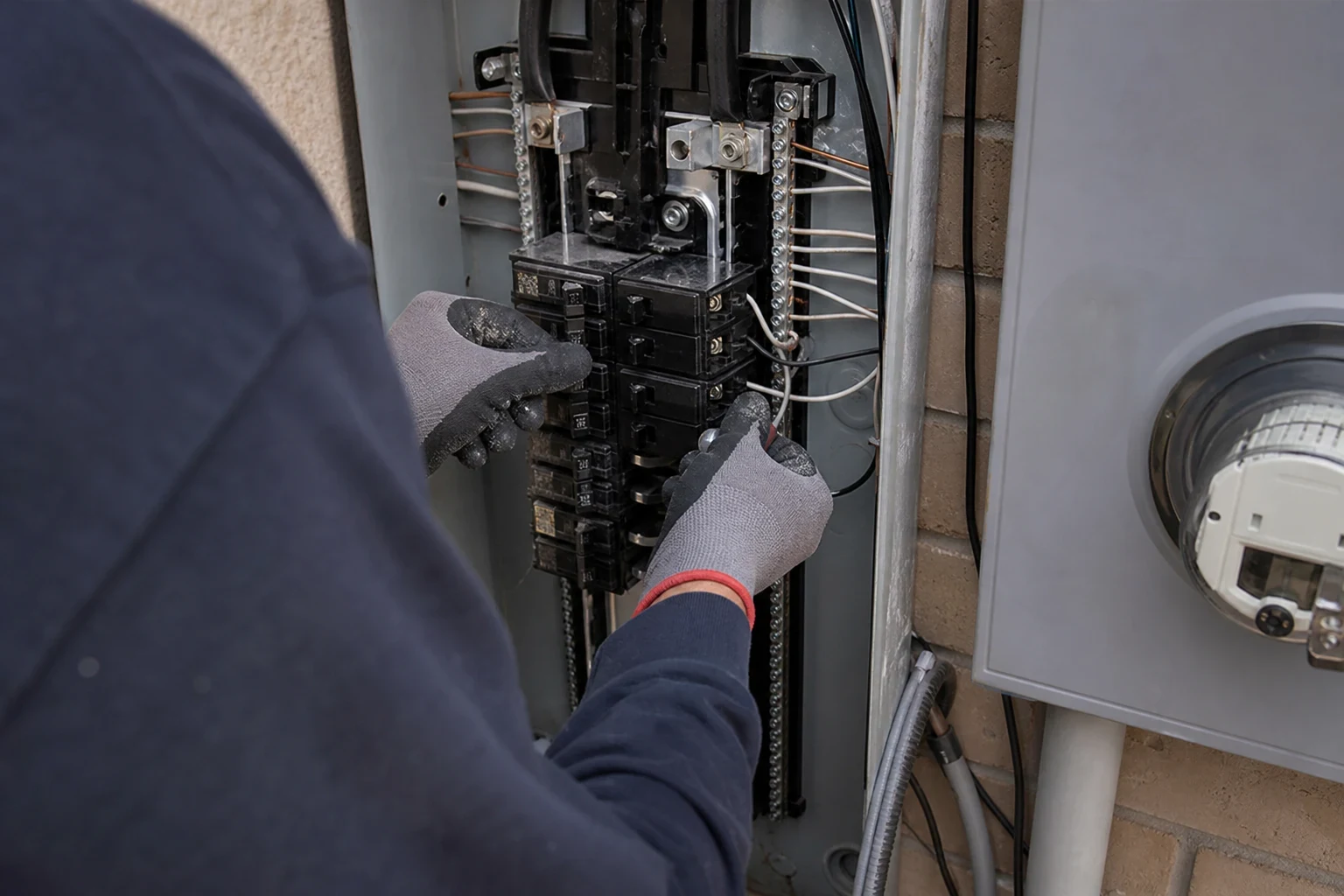
Screw terminals in your electrical panel loosen a little every time the wires heat up and cool down. A loose lug runs hot, and heat is how panel fires start. We shut the panel down, tighten every connection to spec, clean it out and show you what we found.
What a Torque and Clean Actually Fixes
Every connection in your panel is a screw clamping a wire against a metal terminal. Current flowing through that joint warms the copper or aluminum, and the metal expands. When the load drops, it cools and contracts. Over years of that cycle the clamp backs off by tiny amounts. A connection that started tight becomes slightly loose, its resistance rises, and it starts making more heat on its own.
Long summers with air conditioners running most of the day give your panel more of those cycles than a milder climate would. A torque and clean resets the problem: we bring each terminal back to the torque value the manufacturer prints on the panel label or breaker, remove the dust that holds heat and attracts moisture, and look closely for the early marks of trouble.
It is preventive work for a panel that is basically sound. If yours is undersized, has a recalled breaker design or is damaged, we will tell you plainly and talk through panel upgrades instead.
What We Do Inside the Panel
- Safe shutdown and verification
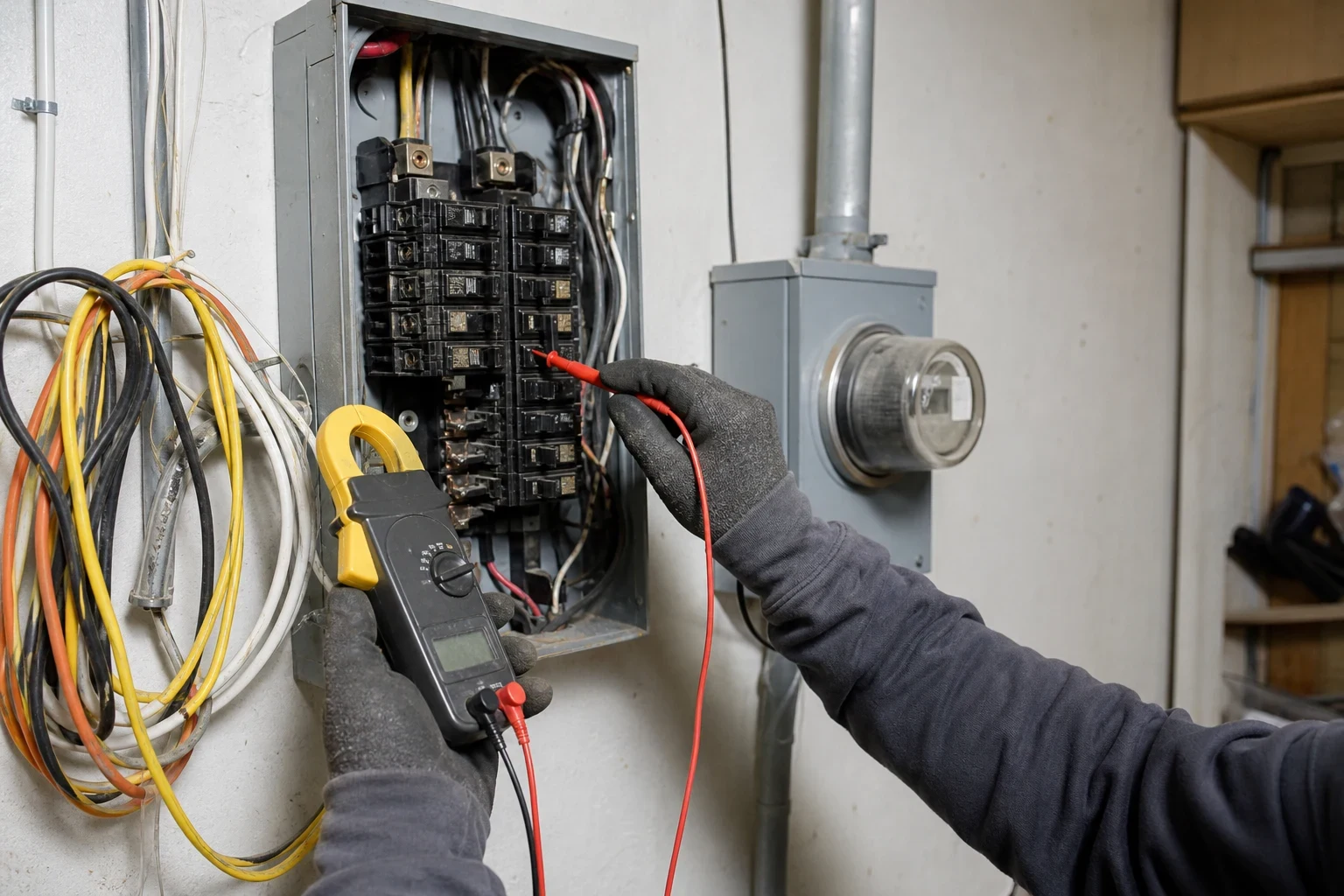
- We turn off the main breaker and test every bus and terminal with a meter before touching anything. Off is confirmed, never assumed.
- Torque to manufacturer spec
- Using a calibrated torque screwdriver and torque wrench, we tighten main lugs, neutral and ground bar screws and each breaker terminal to the listed value. Guessing by feel overtightens small screws and undertightens big lugs, and both cause problems.
- Dust and debris removal
- We vacuum and brush out the enclosure, bus area and breaker faces. Dust insulates hot parts and can hold moisture, and attic or garage panels collect a lot of it.
- Aluminum conductor care
- Many service entrance cables are aluminum. Where the joint calls for it, we clean the strands and apply anti-oxidant compound before retightening, since aluminum oxidizes and creeps more than copper.
- Close inspection for damage
- We look for melted or browned insulation, pitted breaker jaws, corrosion, double-tapped breakers, rodent or insect signs and water tracks from above. You get photos of anything that needs attention.
- Outdoor disconnects and subpanels
- Exterior disconnects, garage subpanels and generator transfer equipment get the same treatment when you include them in the visit.
When Your Panel Needs Its Connections Retightened
Heat coming off the cover
A healthy dead front stays about as cool as the room. If your palm picks up warmth from it, a connection inside is producing heat.
A hum or crackle at the panel
Small-scale arcing at a loose terminal can make a quiet hum near a busy breaker. Once you can hear it, that joint has already started to break down.
Dimming each time the AC starts
A slight dip is expected. A deep one can mean a loose neutral or main lug that struggles to pass the compressor's starting surge.
Brown marks or a scorched odor
Browning on a breaker, a burnt smell, or a breaker that won't sit firmly in place are reasons to get the panel opened before long.
No one has checked it in years
When the panel hasn't been opened by an electrician in a long while, or the house is new to you, this visit gives you a starting point.
What Moves the Price
A torque and clean is quoted per visit, and you hear the price on the phone before we schedule. The main drivers are how much equipment we open and what condition it is in. Anything beyond the maintenance itself gets explained and priced before we do it.
Number of panels
A single main panel is the base job. Subpanels, outdoor disconnects and transfer switches each add time.
Panel size and breaker count
A 40-space panel full of tandem breakers has far more terminals to torque than a small one.
Utility meter coordination
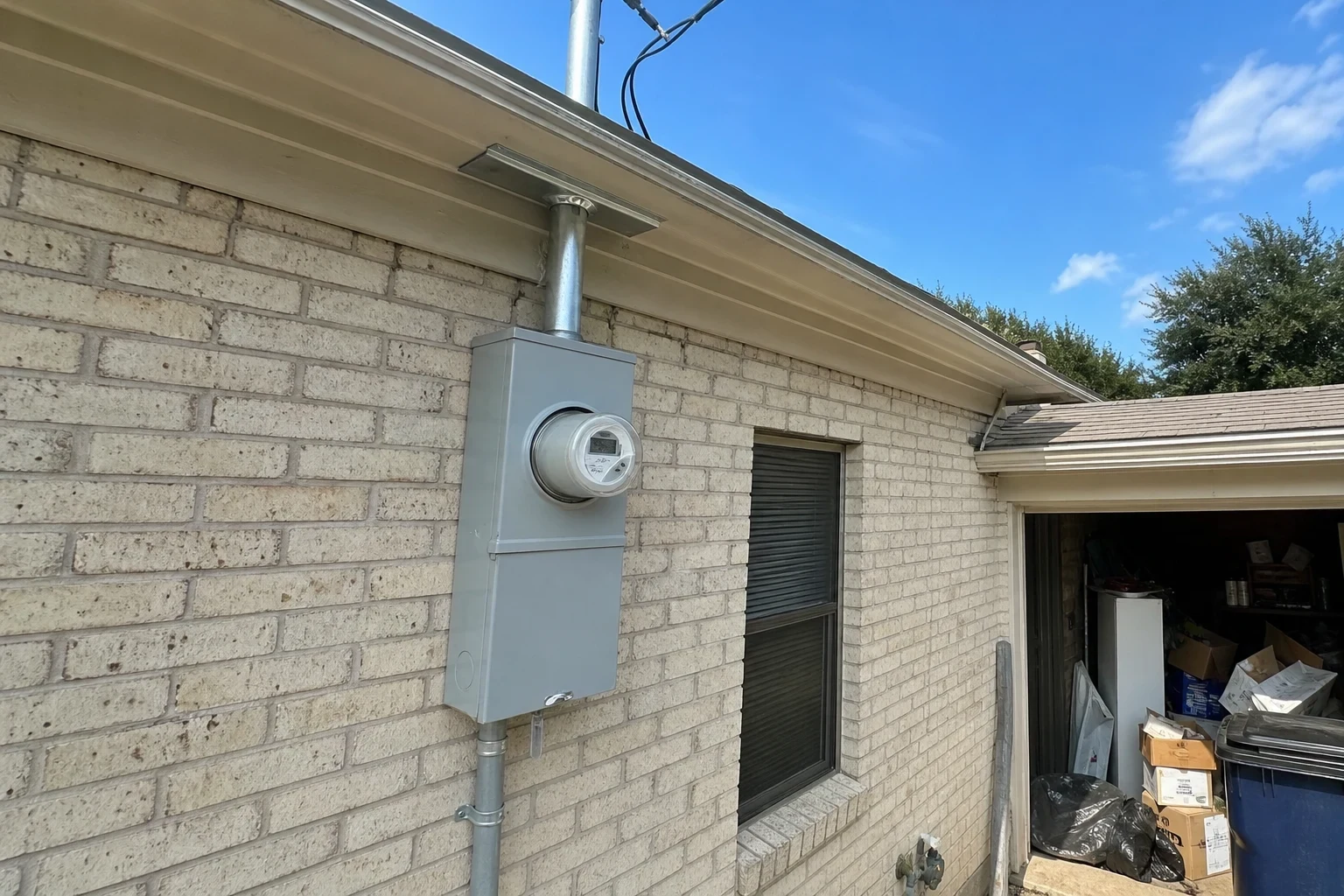
If the main lugs need work, arranging a meter disconnect adds scheduling and time on site.
Parts found worn
A breaker with a pitted jaw or a corroded neutral bar screw should be replaced, not retightened. We show you the part and price the replacement separately.
Access
A panel behind finished shelving or in a tight closet takes longer to open and work safely.
How the Visit Runs
- 1
Plan the shutdown
When you book, we agree on a time that works for the outage. Most homes are without power for a short window, so we plan around refrigerators, medical equipment and anyone working from home.
- 2
Check the line side
The wires from the meter to the main lugs stay live even with the main off. If those lugs need retightening, we coordinate a meter disconnect with the utility so the work is done de-energized.
- 3
Torque, clean and inspect
We open the panel, verify it is dead, then work terminal by terminal. Each connection is cleaned if needed, torqued to spec and checked for damage.
- 4
Restore and report
We reinstall the cover, restore power and confirm breakers and circuits are working. Then we walk you through the photos and tell you what is fine, what to watch and what needs repair.
Panel Maintenance Questions
How often should a panel in good shape get this service?
For most sound home panels, once every few years is enough. Go sooner if heavy loads such as a heat pump or EV charger have been added since the last visit. Panels in a hot garage or on an outside wall see wider temperature swings and loosen sooner. After we see your panel the first time, we can suggest a schedule that fits its condition.
How long is the power out?
With one typical panel, expect roughly one to two hours without power. Extra panels or a meter disconnect make it longer. You get an estimate at booking so you can plan the day.
Isn't this the same as an electrical inspection?
No. An inspection looks and tests only. A torque and clean adds the hands-on work of tightening and cleaning each connection while we check it. If a sale or an insurer calls for a formal evaluation, ask us about code corrections and inspection fixes too.
What if you find a failed breaker or burnt wire?
We pause, take a photo and tell you what went wrong and why. A small item like a damaged breaker can often be replaced on the same visit once you approve it. Bigger problems get their own quote as electrical repair work.
Is a permit needed for this?
Retightening and cleaning are routine maintenance and normally don't need one. If we find a part whose replacement does require a permit, we tell you before starting and take care of the permit and inspection the way the local jurisdiction requires.
Get Your Panel Tightened and Checked
A loose connection gives few warnings before it fails. Book a service visit and we will open your panel, bring every terminal back to spec and show you exactly what we found.